
Venues guide
Backyard Baby Shower — Shade, Power, and a Rain Plan Come First
Your backyard is free and beautiful, but sun, rain, and food safety can ruin the day if you skip them. This guide solves shade, power, and weather backup first, then adds layout zones, rentals, and a $650 budget for 35 guests.
Quick answer
Plan a backyard baby shower around shade, ground conditions, power, restroom access, and a written weather decision before choosing decor. Put seating and food on stable surfaces, connect the house to the event with a clear route, and use one practical focal area. For roughly 35 guests, protect the weather reserve instead of spending the last dollars on flowers or balloons.
Planning constraints
- Name one person who monitors official forecasts and can activate the indoor or postponement plan.
- Anchor canopies and lighting according to manufacturer instructions; never improvise overhead rigging.
- Keep cold food at 40°F or below and hot food at 140°F or above during service.
- Check sprinklers, insects, extension-cord ratings, sun direction, and neighbor quiet hours.
Plan how to plan a backyard baby shower with a concrete concept, venue guidance, guest-flow advice, a realistic U.S. budget, checklist, mistakes, and FAQs. For how to plan a backyard baby shower, the concept and the operating plan need equal attention: one creates delight and the other protects it. The selected point of view is an outdoor home celebration designed with weather protection, ground conditions, utilities, and neighbor impact as first-class decisions. The sample budget is in U.S. dollars and deliberately exposes transport, labor, tax, and contingency instead of treating them as free.
Map the venue before styling it
Treat garden green, sky blue, natural canvas, and one bright seasonal accent as a hierarchy rather than four equal instructions. Assign one tone to broad areas, another to texture, a third to small accents, and the last to readable contrast. Test those roles beside the venue's walls and furniture, because an existing carpet or wood finish becomes part of the composition whether planned or not.
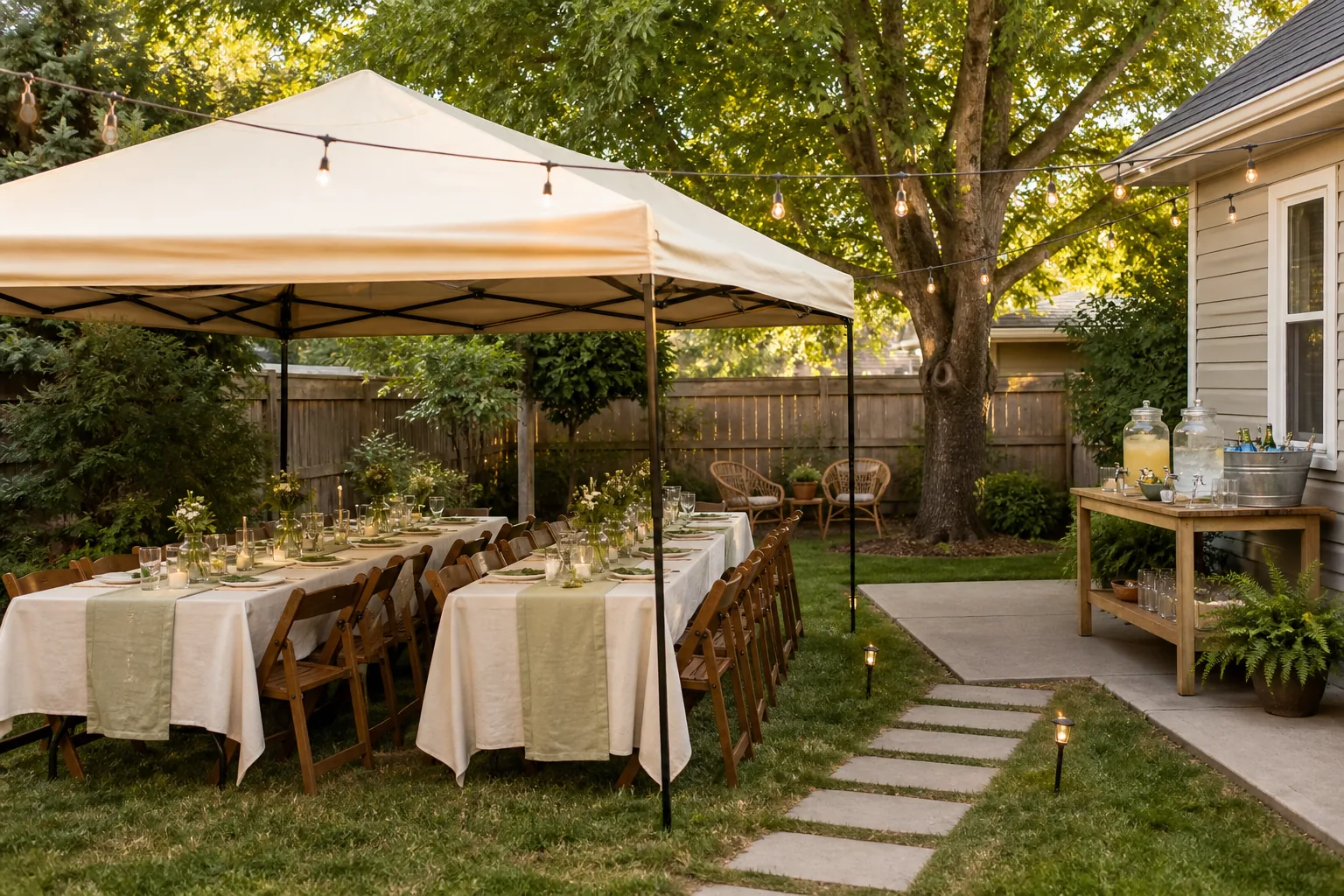
The room's hero should be a shaded dining zone connected to a separate lawn activity area. Draw its width and height to scale, then check chairs, doors, sprinklers, and serving clearance around it. Supporting details should echo the hero at lower intensity. When every table competes to be photographed, the visual story becomes busy and the service plan loses usable space.
Inspect the yard at the exact event hours. Note where shade moves, whether sprinklers run, where extension cords could cross wet ground, and how many level chair positions exist. Test the restroom route from the farthest table and locate the electrical load for fans or warmers. A beautiful corner at 9 a.m. may be glaring, muddy, or inaccessible at 2 p.m.; the timed site check prevents that surprise.
Fit the idea to private backyard, shared courtyard, or covered deck
Map the busiest ten minutes at private backyard, shared courtyard, or covered deck: several arrivals, gifts changing hands, drinks being poured, and a helper carrying a tray. Widen that path before assigning decoration. Confirm load-in time, parking, restroom access, cleanup rules, and any limits on tape, flame, noise, confetti, or overhead work in writing.
List the plan's single point of failure—weather, access, delivery, rigging, or kitchen capacity—and remove it with a confirmed alternative. Record the contact, cancellation terms, and decision time beside the main plan. A fallback earns its name only when another person could activate it without guessing what the host intended. For How to Plan a Backyard Baby Shower, apply this decision to the specific venue, activity, and guest count above.
Design the experience around the guests
Comfort planning starts with guest comfort depends on shade, stable chairs, insect control, restroom directions, and an indoor fallback. Put an accessible route and quiet chair on the floor plan, ask about restrictions on the RSVP, and tell guests what the site is really like. Water and an appealing alcohol-free option should be easy to find throughout the event, not produced only after someone asks.
A practical run of show gives thirty minutes to arrivals, serves food before the highest-attention moment, and opens a hydration and sunscreen welcome station when its helper and materials are ready. Keep the overall event near two-and-a-half to three hours, with a flexible conversation buffer before the close. Exact cues belong to food safety, vendors, and venue departure—not every social minute.
A realistic U.S. budget for this version
The sample allocation totals $650. It shows how how to plan a backyard baby shower can remain complete when tax, transport, service, and a reserve are visible from the start. Local rates will differ, so replace estimates with written totals before paying a nonrefundable deposit.
- Food and nonalcoholic drinks — $208: a menu suited to the event hour, water, an appealing zero-proof drink, ice, ingredient labels, and a small portion buffer for how to plan a backyard baby shower.
- Venue or home readiness — $117: reservation or household preparation for private backyard, shared courtyard, or covered deck, including access, cleaning, parking, permits, and any comfort equipment not already included.
- Decor and flowers — $130: the materials that complete a shaded dining zone connected to a separate lawn activity area, plus readable signs and restrained table accents in garden green, sky blue, natural canvas, and one bright seasonal accent.
- Rentals and service pieces — $78: only the seating, linens, serving equipment, delivery, setup, or pickup required by the measured plan at private backyard, shared courtyard, or covered deck.
- Activities and favors — $46: all supplies, instructions, display materials, and packing needs for a hydration and sunscreen welcome station, with a modest take-home detail if the budget allows.
- Tax, tips, and contingency — $71: applicable tax and gratuity plus a protected reserve for the disruption most likely to affect how to plan a backyard baby shower.
Review the budget with the room plan beside it. A purchase that has no location, owner, setup time, or guest benefit is a candidate to remove. Preserve the food, site readiness, and reserve first; simplify styling in complete layers so the remaining design still reads as intentional. For How to Plan a Backyard Baby Shower, apply this decision to the specific venue, activity, and guest count above.
Action checklist
First commitments
- Visit private backyard, shared courtyard, or covered deck at the planned hour and record measurements, light, sound, parking, power, and restrooms.
- Confirm capacity after placing food, gifts, a hydration and sunscreen welcome station, and an accessible main aisle.
- Put the site rules, load-in window, weather trigger, and responsible contacts in writing.
- Send invitations only after the address, access details, and fallback are dependable.
Production and confirmations
- Build one sample of a shaded dining zone connected to a separate lawn activity area and correct its scale, stability, and color before producing the rest.
- Finalize the menu, service method, seating, rentals, and supplier arrival windows.
- Test a hydration and sunscreen welcome station from instructions through cleanup and assign a lead who is not the primary host.
- Reconcile RSVPs with dietary notes, seats, portions, labels, and activity quantities.
Final week and event day
- Pack by function and label the containers for arrival, food, focal setup, tables, guest care, a hydration and sunscreen welcome station, and cleanup.
- Place the measured venue map, supplier numbers, fallback trigger, and short run of show in the first container opened.
- Chill drinks, confirm safe food holding, charge devices, and stop optional crafting the night before.
- At private backyard, shared courtyard, or covered deck, establish access and service first, complete a shaded dining zone connected to a separate lawn activity area second, and add expendable detail only if the schedule allows.
Mistakes that weaken this specific plan
The plan loses clarity when the host starts spending the full budget on decor before reserving rain cover and climate comfort. Return to the stated direction—an outdoor home celebration designed with weather protection, ground conditions, utilities, and neighbor impact as first-class decisions—and keep only the strongest evidence of it. A complete focal scene, comfortable seating, and dependable food service will read as intentional even when secondary decoration is restrained.
Give every helper a visible definition of done: for example, the activity lead has a hydration and sunscreen welcome station displayed, tested, and stocked before doors open. Route vendor questions to one coordinator. At closing, secure cards, chill safe leftovers, group gifts by destination, count rentals, remove waste, and document the site condition.
Related planning guides
Use Outdoor Baby Shower Planning Guide for another direction that shares part of this plan; Continue with Little Cutie Baby Shower Ideas for a complementary constraint; Compare Baby Shower Food Ideas for Every Style of Party to settle the next operational choice. Keep one attendance figure and the $650 ceiling across those guides so their advice becomes a sequence of decisions rather than separate shopping lists.
Frequently asked questions
How early should I plan how to plan a backyard baby shower?
Start six to eight weeks ahead for a typical gathering. Book private backyard, shared courtyard, or covered deck first if availability is limited, then confirm the guest list, invitation date, menu, and shaded dining zone connected to a separate lawn activity area.
What is a realistic budget for this plan?
A useful working example is $650 for the venue, food, decor, rentals, activities, and contingency described in this guide. Adjust the guest count before cutting comfort or food safety.
How can I adapt the idea for fewer guests?
Keep hydration and sunscreen welcome station, reduce table and food quantities, and concentrate decor into the main sightline. A smaller group benefits from one shared table and more conversational activities.
What should I avoid when planning this shower?
The most common mistake is spending the full budget on decor before reserving rain cover and climate comfort. Make the venue, guest comfort, and one recognizable concept pass a final review before buying secondary details.
Sources and review notes
- National Weather Service outdoor-event safety for monitoring, postponement, and shelter decisions.
- USDA buffet food-safety guidance for time and temperature limits.
- Babylist baby shower planning checklist for invitations, co-hosts, and final confirmations.
Reviewed by the Baby Shower AI Planner editorial team on August 8, 2026. Weather, fire, tent, and noise rules are local and must be confirmed.
Turn this guide into an editable plan
The plan now has a defined point of view, a measured site, a guest-aware schedule, a $650 allocation, and named handoffs. Keep those decisions together when attendance or quotes change. Use that handoff specifically for How to Plan a Backyard Baby Shower.
Open the AI planner with this guide's preset and keep the output editable. Before ordering, compare every generated recommendation with the confirmed venue rules, guest access and dietary needs, written supplier totals, and the final spending ceiling.