
Venues guide
Small-Space Baby Shower Ideas — Less Room, More Charm
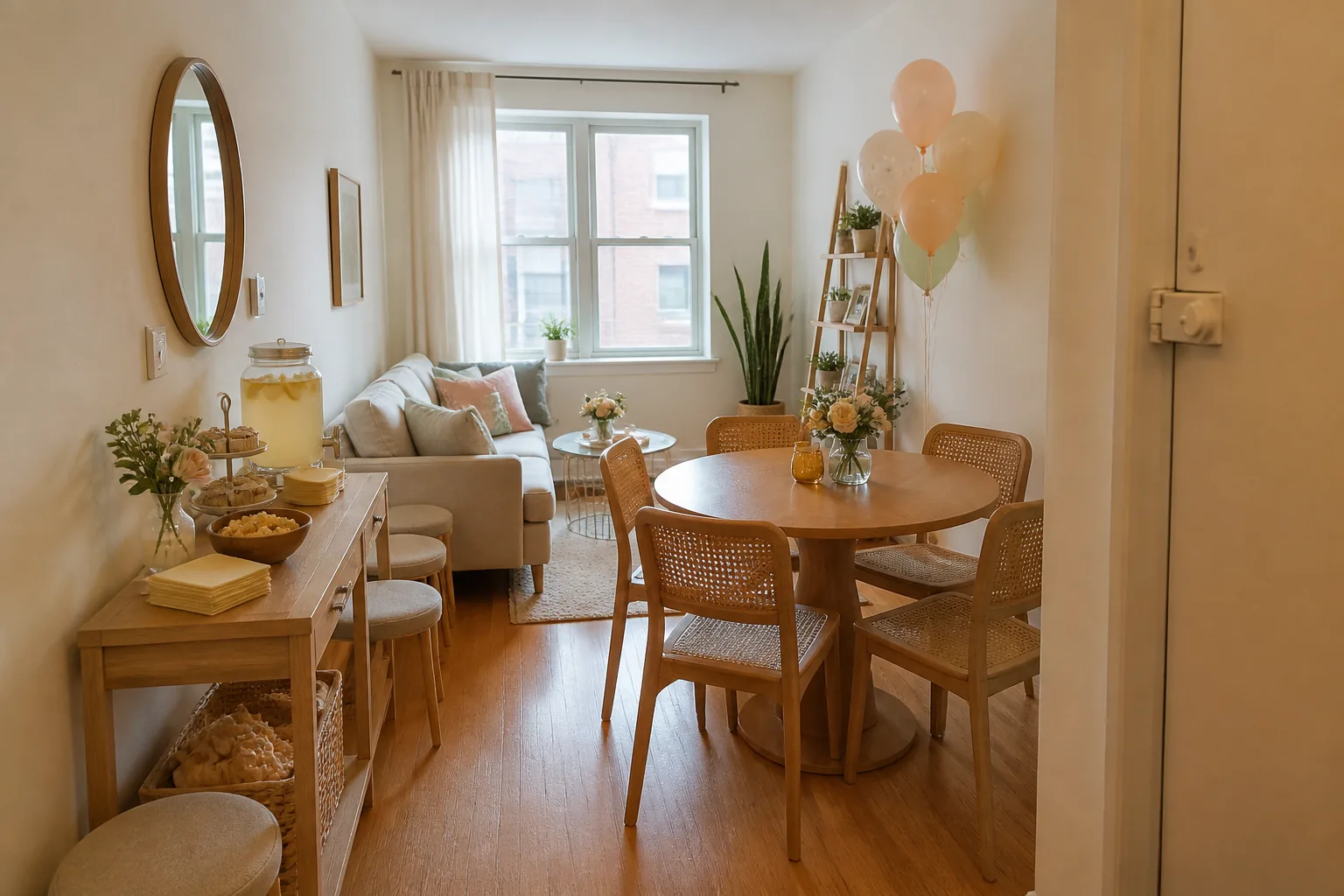
Plan a baby shower in an apartment or small living room that feels intimate, not cramped. Uses vertical decor, compact surfaces, and smart flow for 18 guests on a $400 budget. Buy less, focus more.
Quick answer
For a small-space baby shower, reduce the guest count before shrinking every functional zone. Use perimeter seating, one compact food surface, vertical decor in a single corner, and a timed or open-house format if the room cannot support everyone at once. The room should still have a continuous route from the entrance to seating, food, and the restroom after gifts and coats arrive.
Planning constraints
- Measure the furnished room rather than trusting the listed apartment square footage.
- Avoid floor easels, loose rugs, low balloon clusters, and gift piles in the circulation route.
- Choose seated conversation or a standing mingle format deliberately; do not half-build both.
- Stage coats, strollers, deliveries, and packaging outside the main gathering zone.
Plan small-space baby shower planning guide with a concrete concept, venue guidance, guest-flow advice, a realistic U.S. budget, checklist, mistakes, and FAQs. A coherent small-space baby shower planning guide plan makes trade-offs early, while the venue, guest count, and supplier options are still flexible. The direction here is a compact celebration that uses vertical styling, timed activities, and edited furnishings to make closeness feel intentional. The sample budget is in U.S. dollars and deliberately exposes transport, labor, tax, and contingency instead of treating them as free.
Map the venue before styling it
Limit the visual brief to warm white, one signature color, clear glass, and pale wood. Compare physical samples in daylight and artificial light at apartment, condo lounge, narrow townhouse, or compact studio; screen colors are not reliable enough for final matching. Identify the largest surface, the closest camera view, and the food area, then decide how the palette appears differently in each instead of repeating identical objects everywhere.
The room's hero should be a narrow vertical backdrop that doubles as the photo point and gift-opening frame. Draw its width and height to scale, then check chairs, doors, sprinklers, and serving clearance around it. Supporting details should echo the hero at lower intensity. When every table competes to be photographed, the visual story becomes busy and the service plan loses usable space.
Calculate capacity from functions, not floor area. Draw the door swing, a thirty-six-inch main path, food queue, seated honoree, trash point, and restroom access before adding guest chairs. Remove coffee tables and floor decor, mount signs vertically, and use nesting trays that can disappear after service. Staggering food and activities lets one surface change jobs without asking guests to balance plates in a crowded room.
Fit the idea to apartment, condo lounge, narrow townhouse, or compact studio
Build the room plan for comfort before photography. At apartment, condo lounge, narrow townhouse, or compact studio, that means one adult seat per person during food or the shared activity, a clear restroom route, stable surfaces for drinks, and a quiet place away from speakers. Once those are fixed, place a narrow vertical backdrop that doubles as the photo point and gift-opening frame where it can be enjoyed without narrowing circulation.
List the plan's single point of failure—weather, access, delivery, rigging, or kitchen capacity—and remove it with a confirmed alternative. Record the contact, cancellation terms, and decision time beside the main plan. A fallback earns its name only when another person could activate it without guessing what the host intended. For Small-Space Baby Shower Planning Guide, apply this decision to the specific venue, activity, and guest count above.
Design the experience around the guests
Comfort planning starts with a firm RSVP cap, coat plan, stroller policy, and short activity rotation prevent congestion. Put an accessible route and quiet chair on the floor plan, ask about restrictions on the RSVP, and tell guests what the site is really like. Water and an appealing alcohol-free option should be easy to find throughout the event, not produced only after someone asks.
A practical run of show gives thirty minutes to arrivals, serves food before the highest-attention moment, and opens a wall-mounted advice gallery that needs no table footprint when its helper and materials are ready. Keep the overall event near two-and-a-half to three hours, with a flexible conversation buffer before the close. Exact cues belong to food safety, vendors, and venue departure—not every social minute.
A realistic U.S. budget for this version
The sample allocation totals $400. It shows how small-space baby shower planning guide can remain complete when tax, transport, service, and a reserve are visible from the start. Local rates will differ, so replace estimates with written totals before paying a nonrefundable deposit.
- Food and nonalcoholic drinks — $128: a menu suited to the event hour, water, an appealing zero-proof drink, ice, ingredient labels, and a small portion buffer for small-space baby shower planning guide.
- Venue or home readiness — $72: reservation or household preparation for apartment, condo lounge, narrow townhouse, or compact studio, including access, cleaning, parking, permits, and any comfort equipment not already included.
- Decor and flowers — $80: the materials that complete a narrow vertical backdrop that doubles as the photo point and gift-opening frame, plus readable signs and restrained table accents in warm white, one signature color, clear glass, and pale wood.
- Rentals and service pieces — $48: only the seating, linens, serving equipment, delivery, setup, or pickup required by the measured plan at apartment, condo lounge, narrow townhouse, or compact studio.
- Activities and favors — $28: all supplies, instructions, display materials, and packing needs for a wall-mounted advice gallery that needs no table footprint, with a modest take-home detail if the budget allows.
- Tax, tips, and contingency — $44: applicable tax and gratuity plus a protected reserve for the disruption most likely to affect small-space baby shower planning guide.
Attach each full quote to its category and enter the payment deadline. Grocery plans still need platters, foil, storage, labels, and ice; rental proposals may add delivery and pickup. If the total crosses $400, change one substantial choice while cancellation is possible instead of trimming every category until none feels finished.
Action checklist
First commitments
- Visit apartment, condo lounge, narrow townhouse, or compact studio at the planned hour and record measurements, light, sound, parking, power, and restrooms.
- Confirm capacity after placing food, gifts, a wall-mounted advice gallery that needs no table footprint, and an accessible main aisle.
- Put the site rules, load-in window, weather trigger, and responsible contacts in writing.
- Send invitations only after the address, access details, and fallback are dependable.
Production and confirmations
- Build one sample of a narrow vertical backdrop that doubles as the photo point and gift-opening frame and correct its scale, stability, and color before producing the rest.
- Finalize the menu, service method, seating, rentals, and supplier arrival windows.
- Test a wall-mounted advice gallery that needs no table footprint from instructions through cleanup and assign a lead who is not the primary host.
- Reconcile RSVPs with dietary notes, seats, portions, labels, and activity quantities.
Final week and event day
- Pack by function and label the containers for arrival, food, focal setup, tables, guest care, a wall-mounted advice gallery that needs no table footprint, and cleanup.
- Place the measured venue map, supplier numbers, fallback trigger, and short run of show in the first container opened.
- Chill drinks, confirm safe food holding, charge devices, and stop optional crafting the night before.
- At apartment, condo lounge, narrow townhouse, or compact studio, establish access and service first, complete a narrow vertical backdrop that doubles as the photo point and gift-opening frame second, and add expendable detail only if the schedule allows.
Mistakes that weaken this specific plan
Avoid adding extra rental furniture instead of removing and repurposing what is already there. The remedy is a pre-purchase review that covers scale, venue permission, total landed cost, setup owner, and destination after the event. When one answer is missing, delay the order. That pause is cheaper than repairing a cluttered room or unsafe installation on event morning.
Give every helper a visible definition of done: for example, the activity lead has a wall-mounted advice gallery that needs no table footprint displayed, tested, and stocked before doors open. Route vendor questions to one coordinator. At closing, secure cards, chill safe leftovers, group gifts by destination, count rentals, remove waste, and document the site condition.
Related planning guides
Use How to Host a Baby Shower at Home for another direction that shares part of this plan; Continue with Neutral Baby Shower Ideas with Warmth for a complementary constraint; Compare Baby Shower on a $300 Budget to settle the next operational choice. Keep one attendance figure and the $400 ceiling across those guides so their advice becomes a sequence of decisions rather than separate shopping lists.
Frequently asked questions
How early should I plan small-space baby shower planning guide?
Start six to eight weeks ahead for a typical gathering. Book apartment, condo lounge, narrow townhouse, or compact studio first if availability is limited, then confirm the guest list, invitation date, menu, and narrow vertical backdrop that doubles as the photo point and gift-opening frame.
What is a realistic budget for this plan?
A useful working example is $400 for the venue, food, decor, rentals, activities, and contingency described in this guide. Adjust the guest count before cutting comfort or food safety.
How can I adapt the idea for fewer guests?
Keep wall-mounted advice gallery that needs no table footprint, reduce table and food quantities, and concentrate decor into the main sightline. A smaller group benefits from one shared table and more conversational activities.
What should I avoid when planning this shower?
The most common mistake is adding extra rental furniture instead of removing and repurposing what is already there. Make the venue, guest comfort, and one recognizable concept pass a final review before buying secondary details.
Sources and review notes
- 2010 ADA Standards for Accessible Design for a useful 36-inch accessible-route reference; confirm the rules that apply to the actual building.
- Babylist baby shower planning checklist for guest-list and planning milestones.
- USDA buffet food-safety guidance for small-platter replacement and holding temperatures.
Reviewed by the Baby Shower AI Planner editorial team on August 8, 2026. Capacity and accessibility obligations depend on the specific property.
Turn this guide into an editable plan
Use this guide as the shared brief for small-space baby shower planning guide: one source for scope, venue facts, costs, responsibilities, and fallback choices. Use that handoff specifically for Small-Space Baby Shower Planning Guide.
Open the AI planner with this guide's preset and keep the output editable. Before ordering, compare every generated recommendation with the confirmed venue rules, guest access and dietary needs, written supplier totals, and the final spending ceiling.